
Stitch Markers That Lock On and Stay Put — 50-Pack
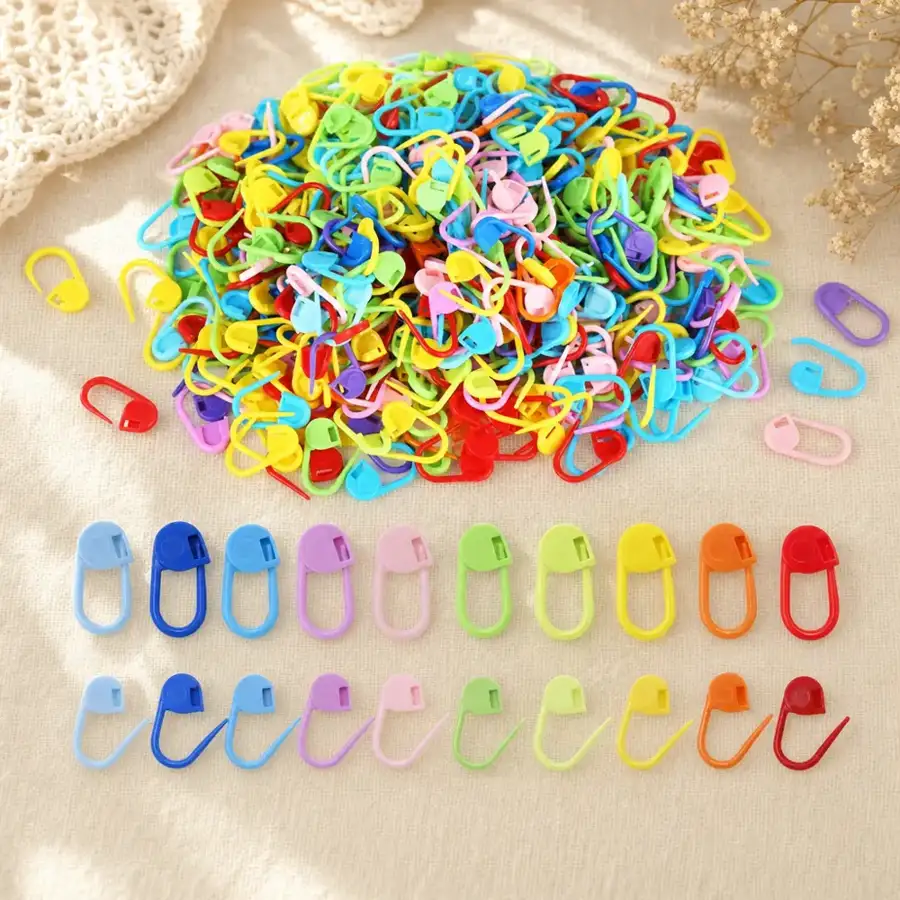
Bright locking stitch markers that clip onto any stitch and stay closed until you open them. They work on knitting needles and every crochet hook alike, so one pack covers your cast-ons, pattern repeats, increases, and dropped-stitch rescues.
🚨 Only a few left in stock
✓ Free shipping ✓ 30-day money-back guarantee 🔒 Secure checkout
Stop recounting stitches. Start trusting your rows.
Every knitter knows the sinking feeling. You put the sweater down on Tuesday, pick it up on Friday, and the pattern says "repeat until 4 stitches remain before marker" — except there is no marker, because you were sure you would remember. Now you are counting 212 stitches of fingering weight under a lamp, twice, because the two counts did not match.
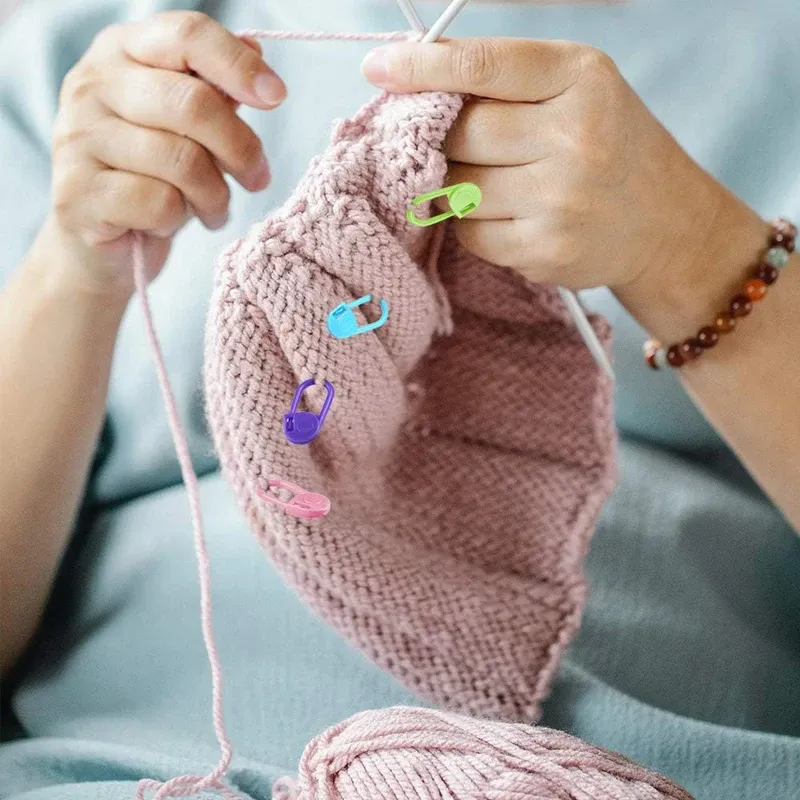
Markers remove that whole category of problem. Clip one at the start of the round and you always know where the round ends. Clip one at each pattern repeat and a mistake can only ever be one repeat wide. Clip one into a dropped stitch the moment you spot it, and it waits safely instead of laddering down ten rows while you find your crochet hook.
The locking style matters more than most beginners expect. Plain rings only work on the needle, between stitches, in knitting. The moment you need to mark the fabric itself — a crochet round, a cast-on tail side, the right side of stockinette, an increase you made three rows ago — you need a marker that opens, clips through the stitch, and locks shut. That is what all 50 markers in this pack do.
Our buyers use them the way pros do: a fixed color for the round start, another for increases, a third parked in the fabric as a row counter checkpoint every 10 rows. At 50 markers per pack, you can run three projects at once and still have spares rattling in the notions tin. If you crochet, start with our crochet stitch markers guide; if you mostly knit, the knitting stitch markers page covers needle sizes and marker placement in detail.
Built for the way yarn crafters actually work
A clasp that locks, not just closes
The pin snaps into a molded catch and stays shut until you open it — so markers survive being shoved in a project bag, sat on, or dragged through a row of frogging.
Cheap ring markers fall off the moment a stitch relaxes. These clip through the stitch loop itself. Verified buyers specifically praise that they "close well" — the clasp is the whole point.
Color-coding built into the pack
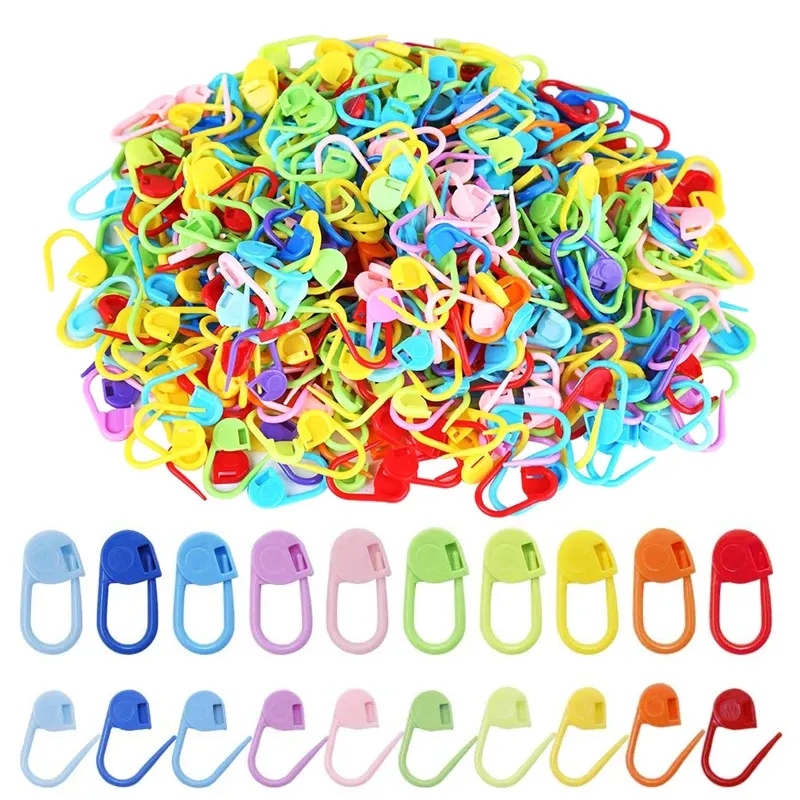
The 50-pack mixes bright greens, blues, pinks, oranges and yellows, so you can assign a color to each job: round starts, increases, repeats, mistakes to fix.
Color systems beat memory. When pink always means "increase here", you stop reading your pattern notes every row. The colors are opaque and easy to spot against both dark and light yarn.
Light enough for lace, tough enough for bulky
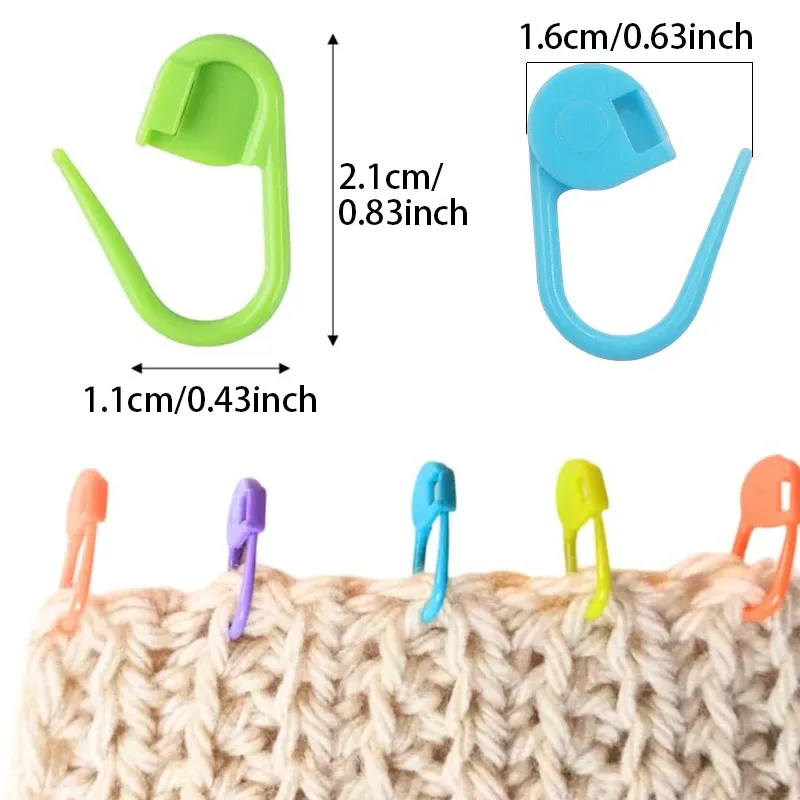
Each marker is smooth molded plastic, about 0.83 in long and well under a gram — it will not stretch a fine stitch or snag plied yarn on the way out.
One honest note from a verified buyer: the plastic is flexible rather than rigid. That is a feature at this size — flex means the clasp springs back instead of cracking.
We pulled every single buyer rating. Here is the raw spread.
Before listing this pack, we fetched all 121 verified buyer ratings from our supplier's feedback system — not a sample, the complete set — and mapped each one. There is not a single rating below 4 stars in the entire history of this product. That distribution, not the average, is what convinced us to stock it.
| Rating | Count | Share of all 121 ratings |
|---|---|---|
| ★★★★★ (5 stars) | 111 | 91.7% |
| ★★★★ (4 stars) | 10 | 8.3% |
| ★★★ and below | 0 | 0% |
Source: supplier feedback API, complete export, July 2026. Ratings are from verified purchases of this exact product.
Yarn craft is not a small hobby
Americans know how to knit, crochet or craft with yarn
— Craft Yarn Council, 2022
registered users on Ravelry, the largest knitting and crochet community
— Ravelry user statistics, 2023
verified buyer ratings on this exact marker pack — none below 4 stars
— Supplier feedback data, complete export, 2026
Those first two numbers explain why notions like markers have quietly become their own category: tens of millions of people work with yarn, and every one of their projects needs its place held. The third number is the only one we can take credit for.
Locking markers vs. rings vs. improvised markers
| Marker type | Works for crochet | Marks the fabric itself | Stays put in a project bag | Snag risk |
|---|---|---|---|---|
| Locking markers (this pack) | Yes | Yes — clips into any stitch | Yes — clasp locks shut | Low — smooth molded plastic |
| Closed ring markers | No — must be worked in | No — needle only | Falls off open work | Low |
| Safety pins | Sort of | Yes, but coil catches plies | Yes | High — the coil eats yarn |
| Scrap yarn loops | Yes | Yes | Unties itself | None, but slow to place |
Rings still have a place in pure needle knitting, and plenty of knitters run both. But if one pack has to cover knitting and crochet — and survive real project bags — the locking style is the only type on this table that checks every column. It is also the style our locking and removable markers page breaks down clasp by clasp.
The improvised options deserve one more sentence, because everyone uses them eventually. Scrap yarn works in a pinch and costs nothing, but it has to be threaded through the stitch and knotted, then unpicked later — slow to place, slower to remove. Safety pins from the sewing box feel equivalent until the coil catches a ply of merino and you spend two minutes freeing it. Improvisation is fine on holiday; it is just not a system.
"Knit on, with confidence and hope, through all crises."— Elizabeth Zimmermann, author of Knitting Without Tears (1971)
Zimmermann's advice holds up better with your place safely marked.
Two things that pair well with a marker pack
Enamel Charm Stitch Markers
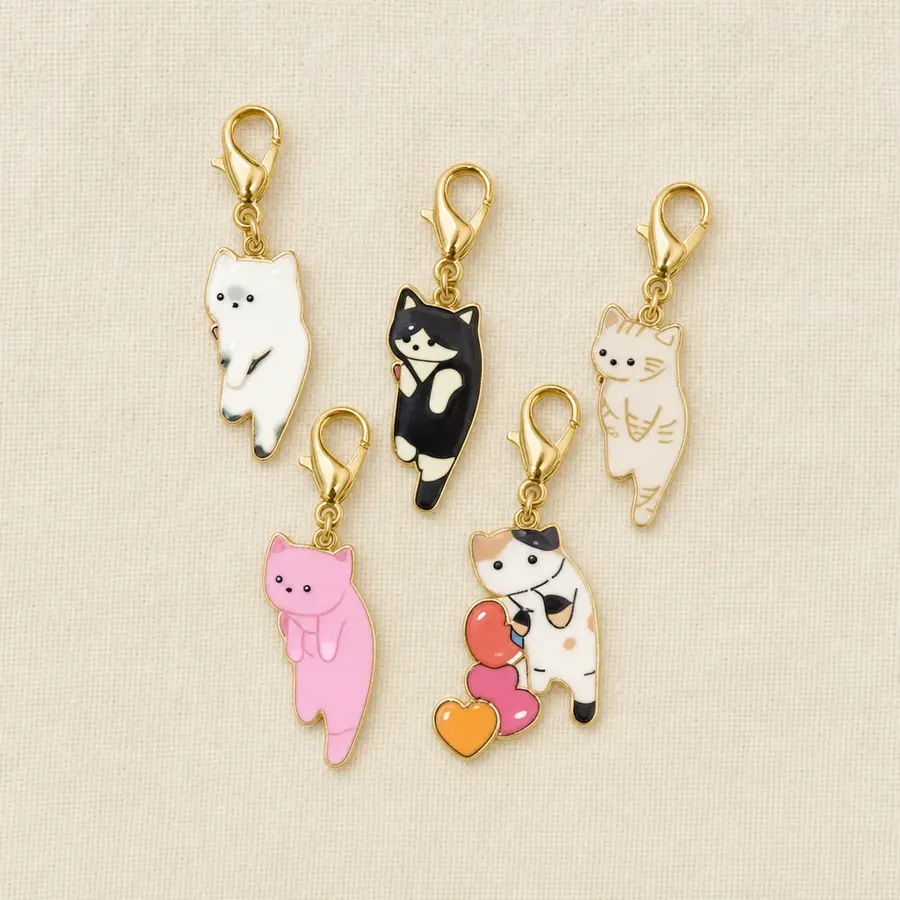
Gold lobster-clasp markers with enamel charms — hanging cats, daisies, starfish, pearl shells. The set you use on the project you show people.
From $14.99 →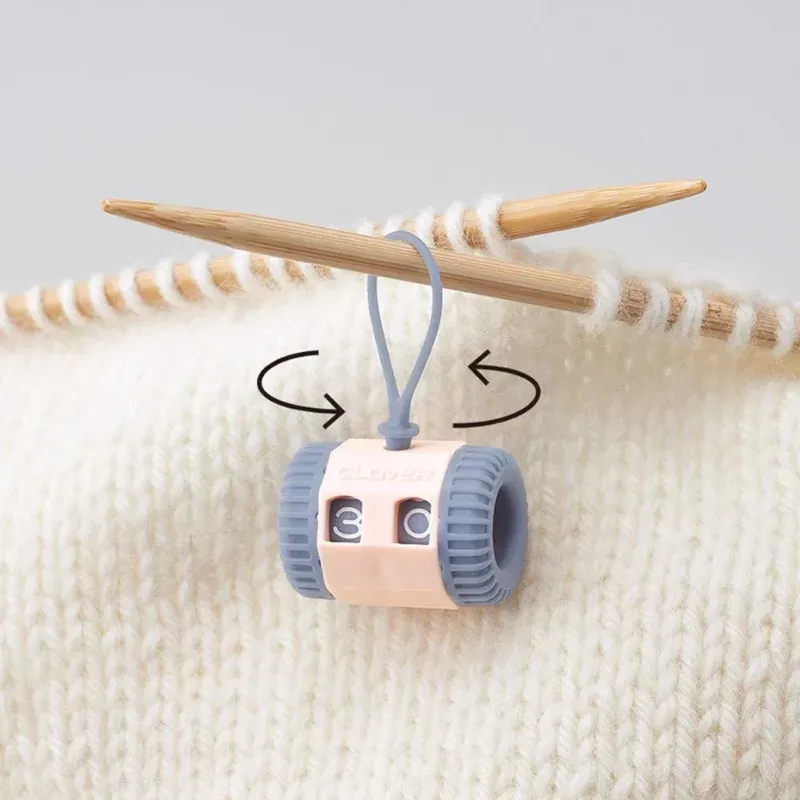
On-Needle Row Counter
A two-dial counter that rides your needle up to 99 rows. Markers hold your place across the row — the counter holds it across the evenings.
From $14.99 →Everything else about this pack
How to choose and use stitch markers
If you are choosing your first markers, decide on style before color or count. Locking markers, like the ones on this page, open and close like a tiny pin: they clip through a stitch loop or hang on the needle, and they are the only style that serves knitting and crochet equally. Closed rings are quicker to slip between stitches on a needle but can never mark the fabric itself. Most experienced crafters end up with both; if you own one pack, own the locking kind.
Then think in jobs, not in markers. The four classic jobs are: marking the start of a round, so circular work has a finish line; fencing pattern repeats, so a cable or lace chart mistake stays local; flagging shaping, so increases and decreases happen where the pattern intends; and freezing accidents, by clipping a dropped stitch before it runs. Assign one color per job and keep the assignment across projects — the color code becomes muscle memory.
Crocheters have a fifth job: holding the working loop. When you put a crochet project down, the live loop can pull straight out. Slip a locking marker into the loop before it goes in the bag and the project cannot unravel, full stop. Amigurumi makers also park a marker in the first stitch of every round, moving it up as they go, because spiral rounds have no visible seam to count from.
How many do you need on hand? For socks and hats, a handful. For a raglan sweater, ten or so at once. For a queen blanket with a 300-stitch foundation chain, a marker every 20-25 stitches means twelve to fifteen working markers before you count spares — and spares matter, because markers migrate to sofa cushions. This is why we sell 50 at a time, and why the price per marker works out to about 30 cents.
Two practical tips from our own testing. First, clip fabric markers through the full stitch, not just one leg of the V — through one leg, tension can pop a marker sideways in loose gauge. Second, when storing, close every marker before it goes in the tin; open markers chain themselves together into a tangle that takes longer to undo than any lost stitch count. For deeper technique, our guide on how to use stitch markers walks through placement photo by photo.
Specifications
| Pack size | 50 markers, assorted colors |
| Style | Locking clip (opens and locks shut) |
| Marker size | 0.83 x 0.43 in (2.1 x 1.1 cm), per supplier spec sheet |
| Material | Smooth molded plastic |
| Use | Knitting and crochet — on-needle or clipped into fabric |
| Shipping | Free, delivered in 8-10 business days |
| Guarantee | 30-day money-back |
Rated 4.9/5 across 121 verified buyer ratings
Verified reviews. When a buyer attached a photo to their review, it is shown as posted — unedited.
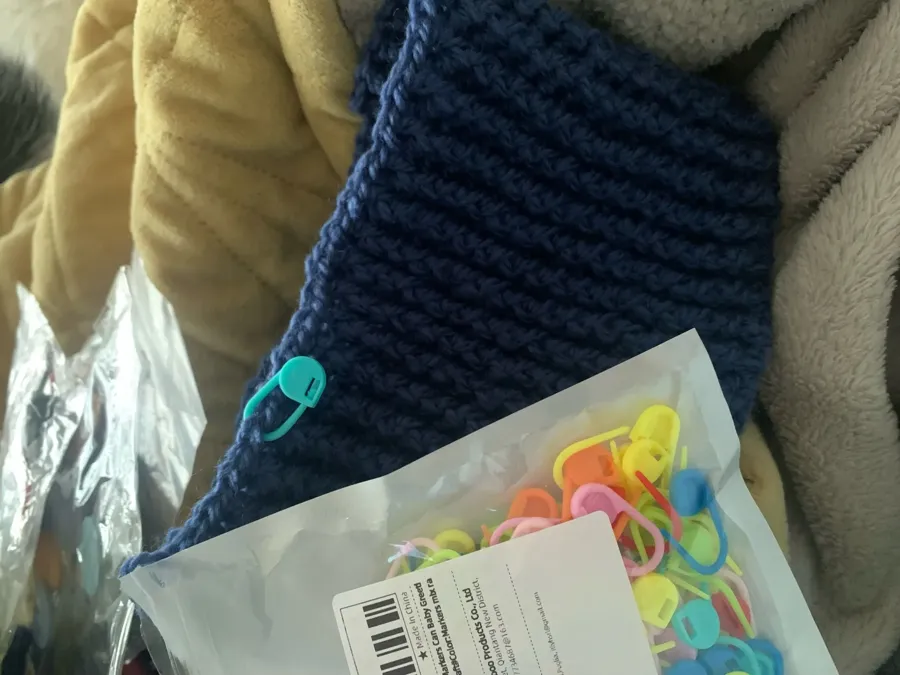
"Really pretty and they arrived fast, the material looks good" (translated)
— Verified buyer
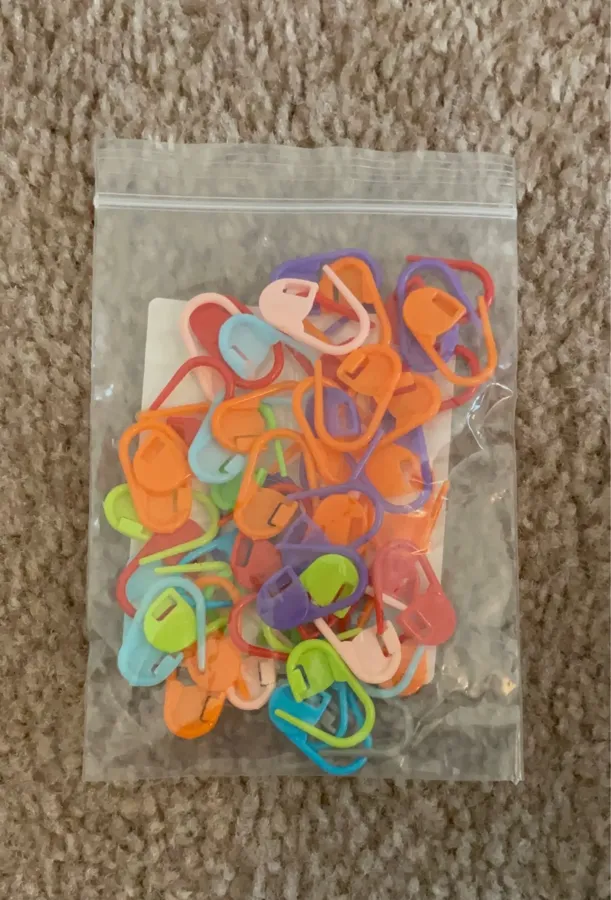
"Arrived exactly as described with a few extra pieces. Thank you"
— Verified buyer
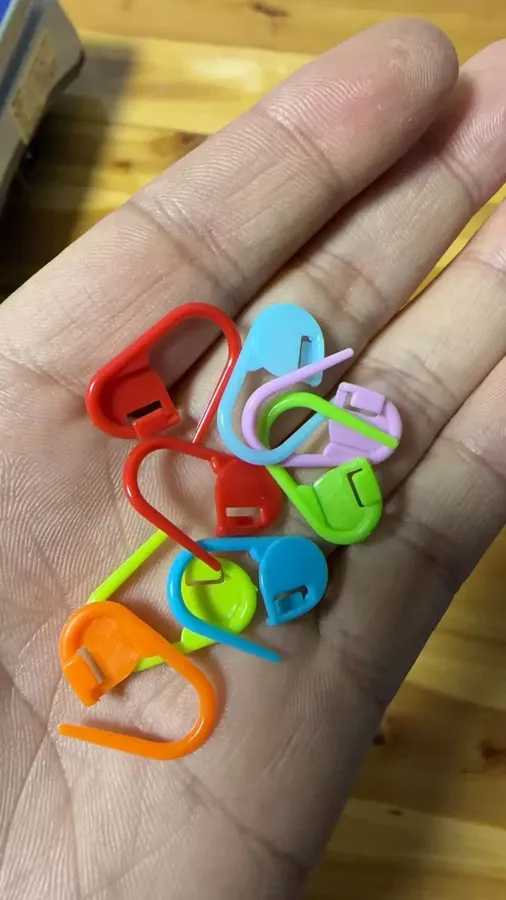
"It's easy to use. The seller gave a few extra"
— Verified buyer
See the full reviews page for more buyer photos, including the 4-star ratings.
Reviewed and updated July 29, 2026. See how we test.
Stitch marker questions, answered
What are stitch markers used for?
Stitch markers flag a precise spot in your work so you never lose it: the beginning of a round, the edges of a pattern repeat, an increase or decrease point, or a dropped stitch you want to rescue later. Instead of counting stitches again and again, you knit or crochet to the marker and know exactly where you are.
How do locking stitch markers work?
Each marker opens like a tiny safety pin. You clip it through a stitch or hang it on the needle, press it shut, and it stays locked until you open it again. Because it locks, it cannot slide off open stitchwork the way a plain ring can, which is why locking markers are the style that works for both knitting and crochet.
Do these work for crochet as well as knitting?
Yes. Crochet stitches are released from the hook as you go, so a closed ring marker would have to be worked in permanently. A locking marker clips directly into the stitch loop and unclips when you are done. Knitters use the same markers on the needle or pinned into the fabric.
How many stitch markers do I actually need?
More than you think. A sweater knit in the round can use ten or more at once: one for the round start, four for raglan lines, plus repeat markers. Blankets with long foundation chains often use a marker every 20 stitches. With 50 in the pack, you can leave markers parked in one project and still start another.
Will the markers snag or stretch my yarn?
The markers are smooth molded plastic with no sharp seam at the clasp, so they slide out of worked stitches cleanly. They weigh well under a gram each and will not stretch the stitch they sit in, even in fine yarn. Verified buyers report using them on projects from lace weight to bulky.
What sizes and colors are in the 50-pack?
The pack is an assorted mix of bright colors — greens, blues, pinks, oranges, yellows and more. Each marker measures about 0.83 in long by 0.43 in wide (2.1 x 1.1 cm), based on the supplier spec sheet. The mixed colors are useful: many buyers assign one color per marker job, like pink for increases.
How long does shipping take?
Orders are processed in 1-2 business days and delivered in 8-10 business days in total, with free shipping. We ship to the United States and 17 other countries, listed in full in our Shipping Policy.
What if I do not like them?
You are covered by a 30-day money-back guarantee. If the markers are not what you expected, contact us within 30 days of delivery and we will refund your order. Returns are free — the full process is described in our Refund Policy.
50 markers. Every project covered.
$14.99, free shipping, 30-day money-back guarantee. Stock is limited on this batch.
Get the 50-Pack — $14.99 →